

America 250
Discover the rich history of Cheyenne Frontier Days with our America 250 exhibit, highlighting five U.S. presidents who have graced this iconic event. Explore their contributions and the impact of their visits on American culture and tradition.



Cheyenne Frontier Days™ and the American Story: Presidential Visits to Cheyenne
The Cheyenne Frontier Days™ Old West Museum offers a unique window into the evolving American story. For the America 250 commemoration, this exhibit highlights five presidential figures whose visits to Cheyenne Frontier Days™ reflect not only moments in local history, but turning points in the broader national narrative. While more than a dozen presidents, past, present, and future, have visited Cheyenne, these particular figures left especially meaningful marks, connecting the energy of the American West with the political and cultural currents shaping the nation.
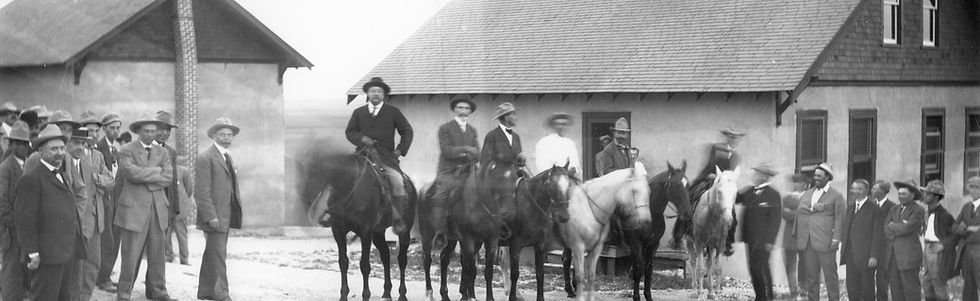
When Theodore Roosevelt visited in the early 20th century, his presence embodied the spirit of the frontier, rugged, expansive and deeply tied to our national identity. His return visits, along with the visit of William Howard Taft, came during a time when Cheyenne Frontier Days™ was already becoming a deliberate effort to preserve and celebrate the rapidly fading frontier way of life. These early presidential appearances helped elevate the event from a regional gathering into a stage of national importance.
By the mid 20th century, visits from John F. Kennedy and Lyndon B. Johnson reveal a different kind of frontier, one shaped by political campaigns, conservation efforts, and a rapidly modernizing America. Their speeches in Cheyenne, including support for Wyoming Senator Gale McGee, demonstrate how this small western city became a platform for national dialogue. By this time, the imagery of presidents arriving had shifted from horseback processions to motorcades and air travel, mirroring the technological and cultural transformations of the country itself.
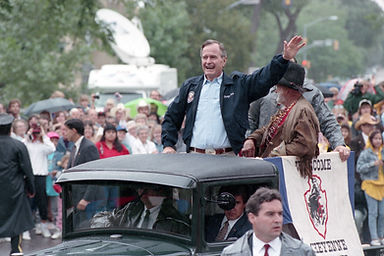
The 1990 visit by George H. W. Bush further underscores this evolution. His time in Cheyenne, marked by a parade, a speech at the Wyoming State Capitol, a visit to F.E. Warren Air Force Base, and even a fishing trip with Senator Alan K. Simpson, illustrates how presidential visits had become multifaceted engagements, blending politics, personal connection, and regional identity. These moments show how Cheyenne and the frontier it had come to represent, continued to serve as both a cultural touchstone and a living stage for the American experience.
Taken together, these visits form an 87 year snapshot of a nation in motion. Through the lens of Cheyenne Frontier Days™, visitors can trace the evolution of American life from frontier preservation to modern political spectacle, while standing in the very spaces where history unfolded. This exhibit invites audiences to consider how national figures intersect with local traditions, and how places like Cheyenne play a vital role in shaping and reflecting the ever changing American story.